
Protection & Control Seminar
Distribution Protection & Control Track
The Distribution Protection & Control Track is designed for those who need a comprehensive understanding of the protection and control of medium-voltage, utility-type distribution systems, including solutions for the challenges due to the high penetration of Distributed Energy Resources (DER).
Sunday, July 28, 2024
5:00-7:00 PM
Seminar Check-in
- Please check-in for the seminar and pick-up your badge sometime between 5:00-7:00 PM on Sunday, July 28th.
- If you can't make it on Sunday, please stop by the Help Desk sometime between 7:00-8:00 AM on Monday, July 29th.
Monday, July 29, 2024
7:00-8:00 AM
Breakfast & Attendee Check-in
- Please check-in for the seminar and pick-up your badge at the Beckwith Electric Help Desk.
8:00-8:30 AM
Welcome & Introductions
8:30-9:45 AM
Distribution Feeder Protection – IEEE C37.230
- Distribution System Reliability
- Standards and Practices
- IEEE C37.230 (Guide for Protective Relay Applications to Distribution Lines)
- Protection Philosophies
- Causes of Faults
- Fault Types
- Distribution System Construction and Configurations
- Impedances Used in Fault Current Analysis
9:45-10:00 AM
Break
10:00 AM-Noon
Distribution Feeder Protection – IEEE C37.230 (Continued)
Noon-1:00 PM
Lunch
1:00-2:45 PM
Distribution Feeder Protection & Control
Distribution protection is a complex scenario with many elements: relayed feeder breakers, recloser controlled feeder breakers, line reclosers, sectionalizing switches, sectionalizers and fuses. The application and location of the protective and sectionalizing infrastructure predicates the application and coordination of protection. Compounding the complexity is the application of DMS/DA and presence of DER/DG. The session covers the distribution topology and protective infrastructure, and application of settable of relays and recloser controls.
- Fault Calculations and Settings
- Protection Devices and Characteristics
- Protective Device Selection and Application
- Protective Functions of Relays and Controls
- Ground Fault Detection Method
- Automatic Reclosing
- Time Overcurrent Device Coordination
- Special Protective Applications
- Fault Event Analysis
2:45-3:00 PM
Break
3:00-4:00 PM
Fault Fundamentals
- Fault Types
- Short-Circuit Calculations
- Calculations and Settings
4:00-5:00 PM
Power Quality for Utility Applications
Maintaining high power quality is essential to energy efficiency and energy cost management, as well as customer satisfaction. Low power quality can damage equipment, cause data loss or corruption, and result in costly power outages. International standards such as IEC 61000-4-30 establish power quality parameters that must be adhered to and processes for measuring the parameters. Meters that are certified to the IEC 61000-4-30 standard have demonstrated their ability to accurately measure the standard’s power quality parameters. Power quality meters must also provide alarm/limit capabilities and waveform recording for after event analysis. EN 50160 reporting is an important feature for meters sold in the European market. It gives the main characteristics of the grid voltage at the customer’s supply terminal under normal operating conditions.
- IEC 61000-4-30 standard implementation
- Power quality classes – S and A
- Power quality testing and measurement techniques
- Power frequency
- Voltage magnitude
- Flicker
- Supply voltage dips and swells
- Voltage interruptions
- Transients, voltage harmonics, and interharmonics
- Voltage unbalance
- Mains signaling voltage on the supply mains
- Rapid voltage changes
- Underdeviation and overdeviation parameters
- Limits/alarms
- Power quality limits
- Alarm emails
- I/O communication for control applications
- EN 50160 reporting
Monday Evening Activities
5:30-9:45 PM
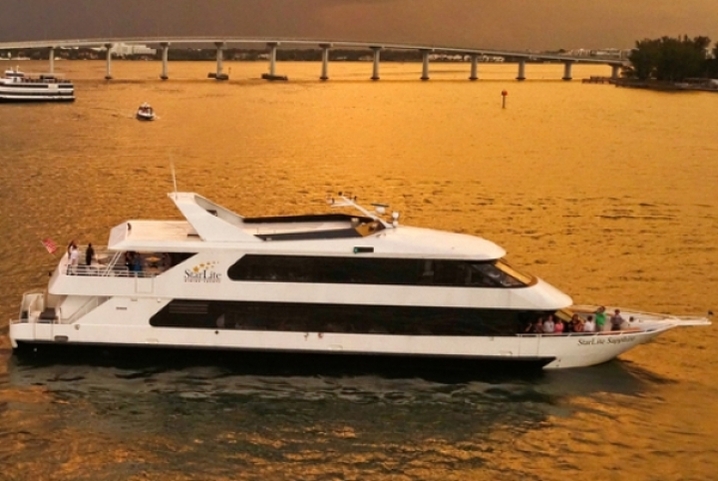
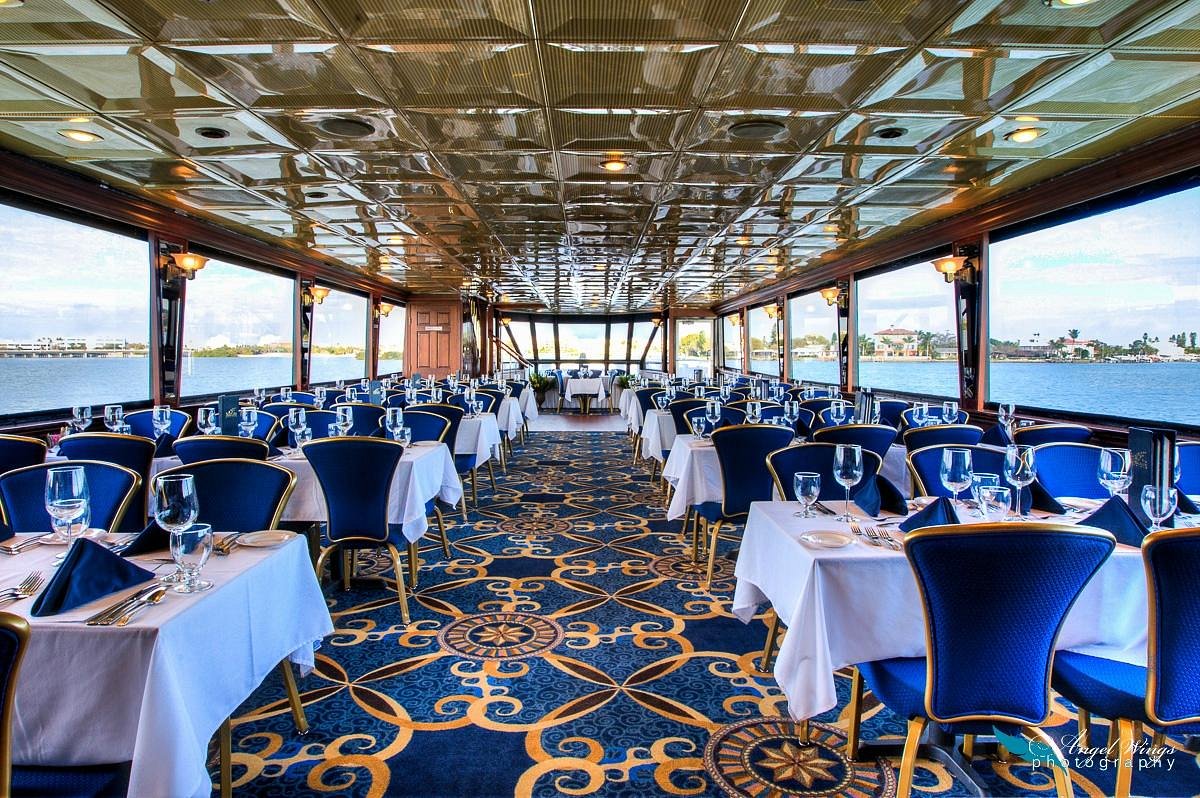
Dinner Cruise
On Monday evening, July 29th, join us for a dinner cruise! This will include a full, restaurant-style menu featuring continental cuisine prepared fresh on board.
- Meet at 5:30 PM in front of the Bird Key (Distribution Track Classroom) at the TradeWinds for bus transportation.
- The cruise departs at 6:30 PM and returns at 9:30 PM. The bus returns to TradeWinds by 9:45 PM.
- RSVP is required to attend. To attend the cruise, RSVP must be received by Tuesday, July 16.
- The cruise is limited to registered attendees and guests that have a Companion Guest Pass.
Tuesday, July 30, 2024
7:00-8:00 AM
Breakfast
8:00-9:45 AM
Feeder Protection Calculations & Settings
- Feeder Protection Calculations Example
- Short Circuit Current
- Per Unit Quantities
- Symmetrical Components
- Fault Types
- Fault Current Calculations Example
9:45-10:00 AM
Break
10:00 AM-Noon
Distribution Automation: FLISR
- As the distribution system becomes more complex and dynamic, the trend in the industry is to automate more of the distribution operation. This session will focus on various Fault, Location, Isolation, and Service Restoration (FLISR) schemes. FLISR is utilized to limit the number of customers affected by a permanent fault by isolating the fault and utilize other sources to reconfigure the system to restore as many customers as possible. The proliferation of Distributed Energy Resources (DER) also needs to be taken into account with distribution automation. These schemes vary in complexity from simple throw over, to more complex loops utilizing peer-to-peer IED communication, and the most advanced that incorporates system models. Scripted or logic-based FLISR schemes will be compared to ones that incorporate system models, from more simplistic models to full Geographic Information Systems (GIS) integration.
Noon-1:00 PM
Lunch
1:00-2:45 PM
Distributed Energy Resources Operation, Control & Protection – IEEE 1547
Distributed Electric Resource (DER) is increasing its penetration into the distribution system. This technical session provides a background into DER operation and associated control and protection considerations for conventional and inverter-based power sources. We will review types of DER/DG and the modes in which they can operate in parallel with the distribution system. Key aspects of IEEE 1547 and a sample DER interconnection screening process are highlighted. Details of on-site standby power system conversion to operate in parallel with the distribution system are shown. Protection methodology at the point-of-common coupling (PCC) and point-of-interconnection (PI) is explored for all types of DER. A treatment of distribution system protection and control considerations and applications with DER is discussed.
- Define Distributed Electrical Resource (DER)
- Explore Types of DERs
- Why DER?
- Utility and Facility Drivers for DER
- Mission Critical Power and Conversion to DER
- Rates and DER Operational Sequences
- Industry Concerns
- IEEE 1547 (Standard for Interconnection and Interoperability of Distributed Energy Resources with Associated Electric Power Systems Interfaces)
- Sample Utility DER Interconnection Guide
- Interconnection Protection: “The Five Food Groups”
- Anti-islanding
- Powerflow
- Fault detection
- Abnormal operating conditions
- Reconnection
- Interconnection Transformer Impacts
- Generator Types and Impacts
- Synchronous
- Induction
- Asynchronous (Inverter Based)
- Example Protection Applications
- Distribution Protection Coordination Issues
- Directionalization
- Reclosing coordination
- Smart Grid / Microgrid and DER
- Impact of IEEE 1547-2018
- Fault ride-through
- Reactive support and voltage control
- System Control with DER
- LTC, Regulator and Capacitor Control Issues
2:45-3:00 PM
Break
3:00-4:30 PM
Distributed Energy Resources Operation, Control & Protection – IEEE 1547 (Continued)
Tuesday Evening Activities
6:00-9:00 PM
Hospitality & Demo Expo
- Please join us Tuesday evening from 6:00-9:00 PM for the Networking & Demo Expo.
- Beckwith Electric and Special Guests will host a reception for a time of networking and information sharing including food and drinks.
Wednesday, July 31, 2024
7:00-8:00 AM
Breakfast
8:00-9:00 AM
LTC Transformer Paralleling
9:00-9:45 AM
Transformer Protection – IEEE C37.91
Transformers are subject to internal faults, the effects of external faults and abnormal operating conditions impressed by the power system events the transformer has no control over but must cope with. False (nuisance) trips are costly as the transformer and load are disconnected. Inability to trip due to lack of sensitivity, lack of certain protections or deficiencies in protection application may cause severe damage to transformers, negatively impacting power flows, impacting power quality and compromising stability. Achieving the ideal balance of secure and dependable protection involves use of an array of elements that protect the transformer from prolonged internal faults, excessive through faults and when challenged by power system faults and anomalies.
- Why transformers fail
- The cost of failures
- IEEE C37.91 (Guide for Protecting Power Transformers)
- IEEE Devices used in Transformer Protection
- Transformer Protection Review
- Transformer Protection Functions
- Explore Protection Functions
- 87T Phase Differential Characteristic
- Compensation in Digital Relays
- Relay Configuration: Winding Arrangement and CT Connection
- 87T Phase Differential Characteristic
- Overcurrent based (50, 51, 50N, 51N, 46)
- Through fault protection (TFM)
- Current Summing & Through-Fault
- Overexcitation (24)
- Generating plant causes
- T&D system causes
- Protection Against Overexcitation – V/Hz versus 5th Harmonic
- Phase Differential (87T)
- Unique Issues Applying to Transformer Differential Protection
- CT performance issues (saturation, remnant flux, tolerance, rating)
- Percentage differential characteristics with variable percentage slopes
- Internal ground fault sensitivity
- Restraints for inrush and overexcitation
- Overexcitation 87T Blocking Restraint – Failure to detect nascent fault
- Overexcitation Adaptive 87T Pickup Restraint – Detects nascent faults
- Adaptive restraint for security
- Point-on-Wave Switching Inrush
- Cross Phase Averaging
- Switch-onto-Fault
- Unique Issues Applying to Transformer Differential Protection
- High Set Phase Differential (87H)
- Ground Differential (87GD), Restricted Earth Fault (REF)
- Interface and Analysis Software: Desirable Attributes
- NERC “State of Reliability”
- Elegant Simplicity – Realization of configuration, settings, logic, monitoring
9:45-10:00 AM
Break
10:00 AM-Noon
Transformer Protection – IEEE C37.91 (Continued)
Noon-1:00 PM
Lunch
1:00-2:45 PM
Transformer, Regulator, and Capacitor Controls
2:45-3:00 PM
Break
3:00-5:30 PM
Transformer, Regulator, and Capacitor Controls (Continued)
Thursday, August 1, 2024
7:00-8:00 AM
Breakfast
8:00-9:00 AM
SCADA Communications
9:00-9:45 AM
Cybersecurity
9:45-10:00 AM
Break
Noon-1:00 PM
Lunch
Thursday Beckwith Factory Tour
3:30-6:00 PM
Beckwith Electric Factory Tour
Visit the Beckwith Electric factory for a behind-the-scenes look at our advanced manufacturing and services capabilities at work. Discover how we turn raw material into cutting-edge technology. Experience the Beckwith Electric commitment to quality, equipment reliability, testing procedures, new product development, and customer service. Talk to Beckwith Electric technical and product support staff and learn first-hand about our technology through live product demonstrations.
Includes transportation to and from the seminar venue.
- 3:30 PM
- Load Shuttle Bus at TradeWinds Resort for Beckwith Headquarters
- 3:30-4:00 PM
- Travel to Beckwith
- 4:00-5:30 PM
- Beckwith Electric Factory Tour & Product Demo
- 5:30 PM
- Load Shuttle Bus at Beckwith to return to TradeWinds Resort
- 5:30-6:00 PM
- Travel to TradeWinds Resort
Transformer Protection Hands-on Testing Lab Breakout Session
Register early as seats will be limited for Breakout Session!
Thursday, August 1, 2024
1:00-3:00 PM
Protection and control systems play a key role for the safe and reliable operation of today’s electricity power systems. The complexity of multifunction digital protection presents considerable challenges to those responsible for testing and commissioning these devices. These hands-on sessions are designed for individuals who are not required to learn complex setting equations, but want a solid understanding of proper test procedures.
The following will be included in the Hands-on Testing Lab Breakout Sessions:
- Learn skills required to test and commission Beckwith relays.
- Gain familiarity with the operating principles of Beckwith relays and controls.
- Hands-on experience with Beckwith IPSCom to assist in the testing process.
Distribution Feeder/Recloser Protection Hands-on Testing Lab Breakout Session
Register early as seats will be limited for Breakout Session!
Thursday, August 1, 2024
10:00 AM-Noon
Protection and control systems play a key role for the safe and reliable operation of today’s electricity power systems. The complexity of multifunction digital protection presents considerable challenges to those responsible for testing and commissioning these devices. These hands-on sessions are designed for individuals who are not required to learn complex setting equations, but want a solid understanding of proper test procedures.
The following will be included in the Hands-on Testing Lab Breakout Sessions:
- Learn skills required to test and commission Beckwith relays.
- Gain familiarity with the operating principles of Beckwith relays and controls.
- Hands-on experience with Beckwith IPSCom to assist in the testing process.
PG&E Led Distribution Automation Hands-on Testing Lab Breakout Session
 Join Beckwith Electric and PG&E in a new Distribution Automation Hands-on Testing Lab. Learn from PG&E’s team of experts on how to test recloser controls. This includes procedures, best practices, and practical field experience using testing tools from the major test set vendors like Megger, Doble, and Omicron.
Thursday, August 1, 2024
1:00-3:00 PM
Register early as seats will be limited for Breakout Session!